News

How Is the Fiberglass Hull of Boats Manufactured

2026-07-14 0 Leave me a message

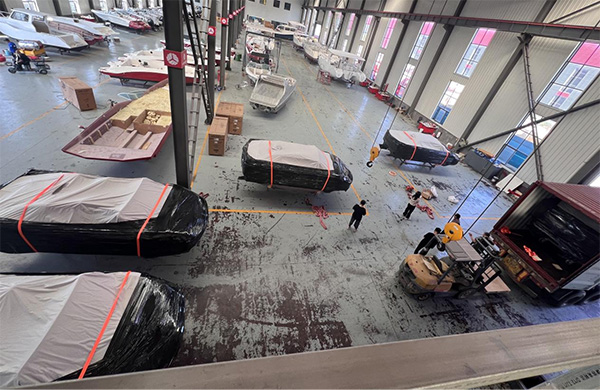
LAWADA’s core principle of vacuum infusion is to arrange dry fiberglass reinforcements inside a sealed mold, form negative pressure via vacuum pumping, and draw liquid resin evenly through fiber layers. The whole process is closed, which reduces resin waste and internal voids of the hull. The finished fiberglass laminate has balanced fiber-resin proportion, delivering uniform structural strength across the whole hull surface. This mature molding technology is adopted to produce the hull of its 13.8m patrol boat, matching the performance demands of long-term maritime patrol work.

Manufacturing Procedures of Fiberglass Hull

1. Mold Preparation

Release agent and gel coat are evenly coated on the mold surface to guarantee smooth hull exterior and easy demolding after curing.

2. Fiberglass Layup

Multi-layer fiberglass fabrics are laid on the gel coat according to structural design standards, with core materials added to improve hull rigidity.

3. Vacuum Sealing

Peel ply, flow media and vacuum bag film are covered on laid fiberglass layers, and all edges are fully sealed to prevent air leakage.

4. Vacuum Inspection

A vacuum pump removes air inside the sealed bag, and workers test tightness to avoid incomplete resin infiltration caused by air leakage.

5. Resin Infusion

Mixed resin is guided into the mold through preset pipelines. Vacuum pressure drives resin to fully soak all fiberglass layers.

6. Curing and Demolding

The composite part is left to cure under constant vacuum pressure. After full hardening, vacuum auxiliary materials are removed, and the complete fiberglass hull is separated from the mold.

7. Post-processing

Polishing, cutting and structural reinforcement are conducted on the fiberglass hull to match subsequent assembly work.


Application of Fiberglass Hull on LAWADA 13.8m Patrol Boat

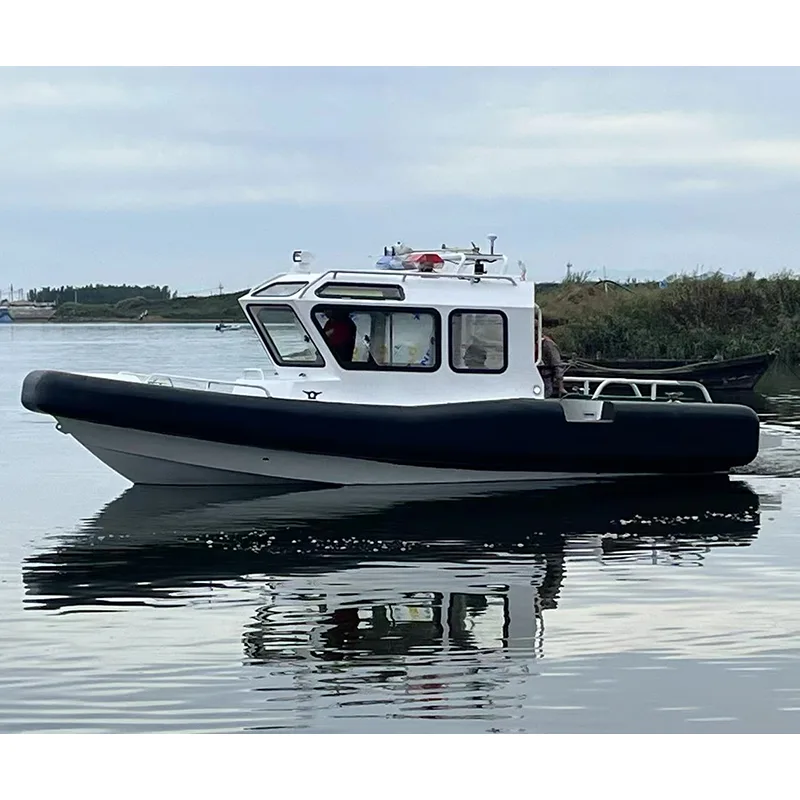
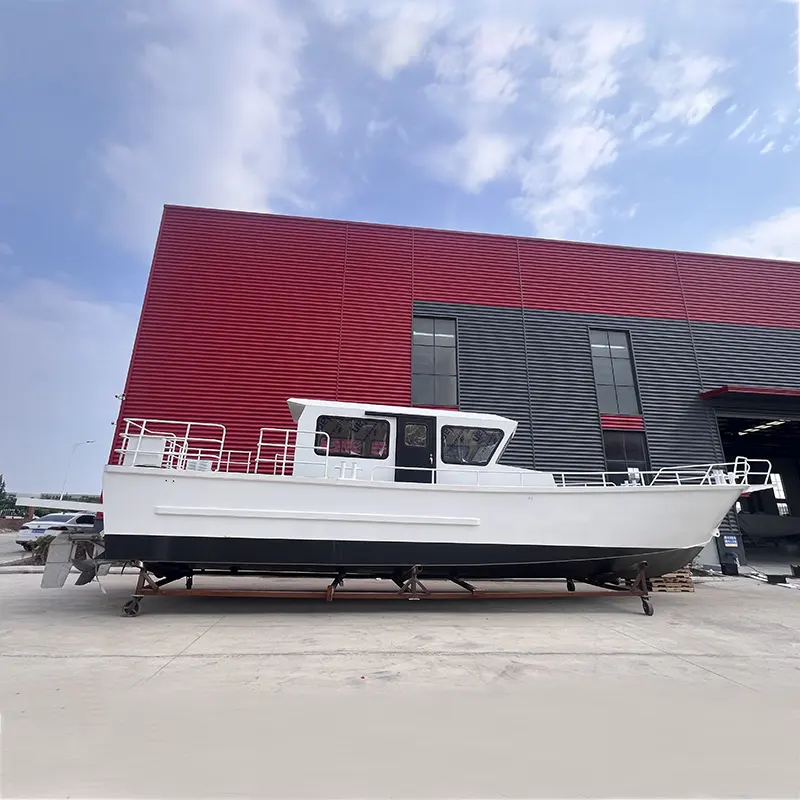
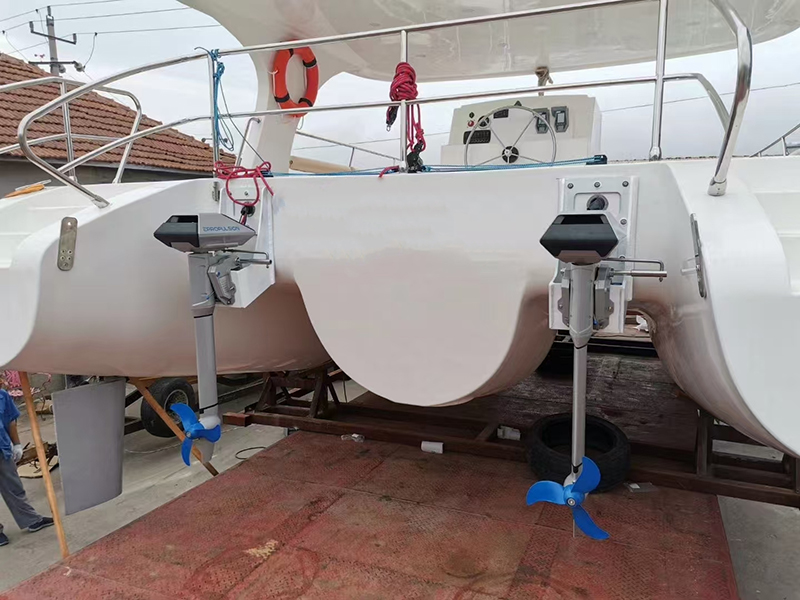
LAWADA’s 13.8m patrol boat adopts fiberglass as the main hull material, entirely manufactured via vacuum infusion technology. The fixed dimensional parameters of the vessel remain consistent: overall length 13.8m, overall beam 3.77m, draft 0.85m, rated capacity 8+2 persons. The power system is equipped with two 350 HP American Mercury horizontal diesel engines.

This fiberglass hull design delivers stable wave-breaking performance and horizontal stability during navigation. The closed vacuum infusion process ensures consistent thickness and structural strength of the fiberglass hull, lowering maintenance frequency in saltwater environments. Standard supporting facilities of the vessel include fiberglass console cabin, stainless steel handrails, complete electric system, mooring devices and life-saving equipment. Optional accessories such as GPS, VHF and fish finder can be installed on demand. LAWADA supports customized hull color and equipment configuration, with standardized after-sales maintenance services for patrol operation units.

Summary

Fiberglass remains the primary structural material for modern patrol boat hulls, and vacuum infusion forms a standardized, replicable manufacturing system for fiberglass hull production. LAWADA integrates mature fiberglass molding technology into its patrol boat production, supplying stable, corrosion-resistant fiberglass hull vessels to meet various maritime patrol task scenarios.

Related News
Leave me a message
X
We use cookies to offer you a better browsing experience, analyze site traffic and personalize content. By using this site, you agree to our use of cookies.Privacy Policy
RejectAccept