Whatsapp
When you read a boat specification sheet from a Chinese shipyard, you will usually see Stability, Displacement and Draft listed as core technical items. They describe whether the vessel keeps balance on the water, how much load it can carry, and how shallow a channel or port it can enter. For leisure boats, passenger vessels and official service boats sold to overseas markets,understanding these three figures before order placement can avoid mismatches in capacity, trim and water depth during sea trial and delivery.
Stability: Can the hull return upright after waves or turns
Stability is the ability of a vessel to return to an even, upright position after wind, waves, current or a sharp turn has tilted it. Small-angle stability measures how the hull recovers under routine rocking and side forces. Large-angle stability shows how much margin remains against capsizing when the boat leans heavily in rough water. High deck cargo, water trapped on the deck, or sloshing liquid inside tanks can raise the center of gravity or create a free-surface effect, and both reduce stability. When choosing a boat, buyers should look at hull design and beam, and also confirm where people, fishing gear, fire-fighting equipment and fuel tanks will be placed.
Displacement: How much load the boat is designed to carry
Displacement is the total weight of water displaced by the submerged hull, usually measured in tons. Under Archimedes' principle, displacement equals the weight of the hull itself plus every item on board, including engines, fuel, fresh water, crew, passengers, equipment and cargo. Quotes usually separate two conditions. Lightship displacement covers the hull and fixed machinery only, with no fuel, crew or cargo. Displacement at full load corresponds to the maximum design waterline, and shows the total carrying scale of the vessel. Before signing an order, buyers should explain the intended use and expected payload, so the yard can match displacement, range and equipment layout to the actual working condition.
Draft: Whether the boat can enter the port and pass shallow water
Draft is the vertical distance from the lowest point of the keel to the water surface, usually given in meters. It sets the minimum water depth required for the channel, anchorage or port. Local water depth must exceed the boat draft with a reasonable clearance, otherwise the vessel may run aground or touch bottom. Draft changes during operation. More cargo, fuel and crew push the hull deeper, so draft increases. The same boat also draws slightly more water in a fresh-water river than in sea water, because fresh water has lower density and the hull must displace a larger volume to gain enough buoyancy. For island operations, shallow-water routes and inland-water work, buyers should compare both light and loaded draft against the actual depth of the target port.
How the three parameters work together
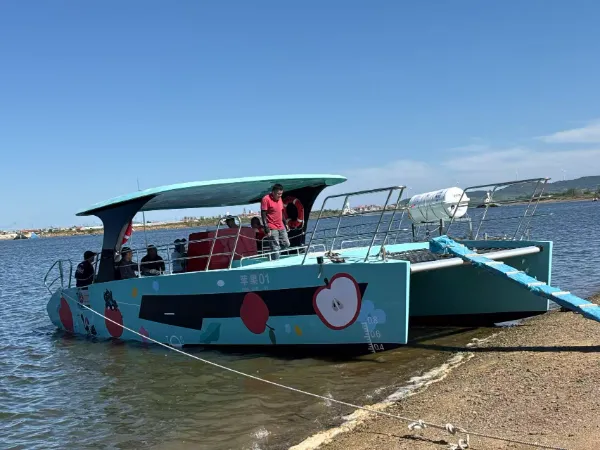
More onboard load raises total weight, so displacement increases. The hull sits lower in the water and draft grows. The height and position of cargo and equipment also change the center of gravity, which directly affects stability. These three figures cannot be judged separately; they must be read together with sea area, working purpose, passenger count and equipment weight. Offshore fishing boats place strong emphasis on stability and range. Fire boats focus on carrying fire pumps and hoses. Leisure catamarans need passenger space and enough depth clearance for resort harbors. Before confirming a purchase, send the planned sea condition, route depth and loading list to the builder, and verify stability margin, full-load displacement and loaded draft. This makes inspection and daily operation smoother after the vessel reaches the buyer's market.